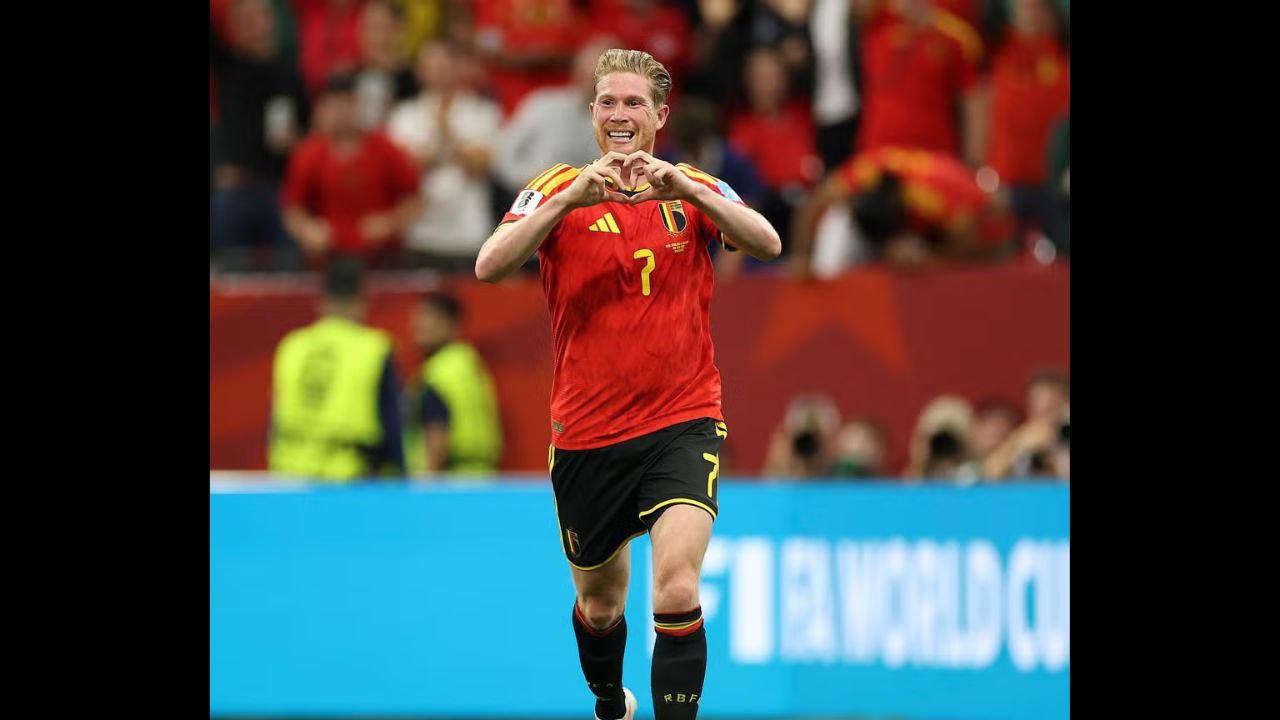
Kevin De Bruyne remains one of Belgium’s most influential footballers, but his role at the 2026 FIFA World Cup has become a major talking point. While many fans have questioned whether the experienced midfielder is dealing with a new injury, the latest updates indicate that he is available for selection but has not yet returned to full match fitness.
Belgium head coach Rudi Garcia has confirmed that De Bruyne is fit enough to be included in the squad, although he has recently started matches on the substitutes’ bench. The decision reflects the team’s careful management of his physical condition rather than a fresh injury setback.
With Belgium competing on football’s biggest stage, supporters are eager to know when their captain could return to the starting lineup.
Current Status
Kevin De Bruyne is available for Belgium during the 2026 FIFA World Cup.
However, coaching staff have indicated that he is still working toward full competitive sharpness. Rather than risking overloading one of the team’s most important players, Belgium has chosen to manage his playing time carefully.
This approach allows him to contribute during matches while continuing to improve his overall fitness.
Bench Role
One of the biggest surprises for supporters came when De Bruyne was named among the substitutes for Belgium’s Round of 16 match against the United States.
Head coach Rudi Garcia explained that the decision was based on fitness rather than tactical concerns or disciplinary reasons. According to Garcia, the midfielder had not yet reached the physical level required to start such an intense knockout match.
Despite beginning on the bench, De Bruyne remained available to enter the game whenever needed.
No New Injury
Recent reports make it clear that De Bruyne is not currently sidelined with a fresh injury.
Instead, Belgium’s medical and coaching staff are monitoring his recovery from previous physical setbacks while ensuring he regains full rhythm safely.
Modern football places enormous physical demands on elite players, particularly during major international tournaments where recovery time between matches is limited. Careful workload management has therefore become an important part of Belgium’s strategy.
Hamstring Recovery
One of the biggest challenges De Bruyne faced over the past year came in October 2025.
While playing for Napoli, he suffered a high-grade tear of the biceps femoris muscle after taking a penalty. The injury required surgery in Antwerp and resulted in an extended rehabilitation period.
The recovery kept him out of action for nearly five months and forced him to miss around 30 matches across club competitions.
Returning from a long-term hamstring injury often requires gradual rebuilding of strength, endurance, and confidence before a player reaches peak performance again.
Facial Setback
In May 2026, De Bruyne experienced another unfortunate incident during Napoli training.
A collision resulted in a split cheekbone that required four stitches. Fortunately, medical assessments confirmed there was no significant head trauma, allowing him to avoid a lengthy absence.
Although he missed one Serie A fixture, the injury proved far less serious than initially feared.
He was able to resume football activities after completing the necessary recovery process.
Belgium’s Approach
Belgium’s coaching staff appear focused on balancing immediate results with the long-term wellbeing of one of their most experienced players.
Rather than asking De Bruyne to play every minute, the team has chosen a measured approach that allows him to influence games without placing unnecessary strain on his body.
This strategy is particularly important during tournament football, where matches are played within short intervals and physical fatigue can quickly accumulate.
Why Fitness Matters
Being medically available is different from being fully match fit.
Players returning from lengthy injuries often require additional weeks of competitive football before recovering their normal pace, movement, and stamina. Even when they have medical clearance, coaching staffs frequently manage their minutes until they regain complete confidence and physical readiness.
Belgium’s handling of De Bruyne reflects this modern sports science approach.
The objective is not only to have him available today but also to ensure he remains effective throughout the remainder of the tournament.
What Fans Can Expect
Supporters should continue expecting Kevin De Bruyne to play an important role for Belgium.
His vision, passing ability, leadership, and experience remain among the team’s greatest strengths. As his fitness continues improving, there is every possibility that his playing time will increase during later stages of the competition.
Coaches typically adjust lineups based on player condition, tactical needs, and opponent analysis, meaning De Bruyne could return to the starting eleven when the staff believes he is fully prepared.
Looking Ahead
Kevin De Bruyne’s current situation should be viewed as careful fitness management rather than a new injury concern.
After recovering from significant physical setbacks over the past year—including a major hamstring injury and a facial injury during training—he has returned to competitive football and remains available for Belgium at the 2026 FIFA World Cup.
Although he is not yet considered 100 percent match fit, his presence in the squad gives Belgium an experienced leader capable of changing matches whenever called upon. As the tournament progresses and his conditioning continues to improve, fans will be watching closely to see when one of the world’s premier midfielders resumes his familiar role at the heart of Belgium’s starting lineup.